
TL;DR: Cebuano (locally just called Bisaya) is the everyday language of Cebu and the most widely spoken native language in the Philippines, with roughly 20-22 million first-language speakers across the Visayas and Mindanao. It’s not a Tagalog dialect — it’s a separate language with its own grammar, built on verb “focus” markers rather than English-style tenses. Pronunciation is phonetic and easy to fake; the grammar is the hard part. You don’t need it to get by (English works fine in tourist Cebu), but learning 15-20 phrases and numbers changes how locals treat you. Verified July 2026.
If you’ve spent any time around Temple of Leah or Tops Lookout listening to tricycle drivers chat with each other, you’ve heard Cebuano — not Tagalog, not “Filipino,” but Bisaya, the language most Cebuanos actually think and dream in. This guide goes deeper than a phrase list: who speaks Cebuano, where the dialects split, how the grammar actually works, how to pronounce it, and a bigger phrasebook than most travel sites bother with. If you want the short comparison against Tagalog first, read Cebuano vs. Tagalog explained; if you’re wondering whether you even need this, check do people speak English in Cebu. This one is for travelers who want to actually understand the language behind the island.
Cebuano at a Glance
| Fact | Detail |
|---|---|
| Local name | Bisaya, Binisaya (formal/linguistic name: Cebuano) |
| First-language speakers | ~20-22 million |
| Main regions | Cebu, Bohol, Siquijor, parts of Leyte, much of Mindanao |
| Language family | Austronesian → Malayo-Polynesian → Bisayan |
| Writing system | Latin alphabet (historically Badlit script) |
| Related to Tagalog? | Related language family, not mutually intelligible |
| Best free resource | TalkBisaya.com |
Verified July 2026.
How Many People Speak Cebuano — and Where?
Around 20-22 million people speak Cebuano natively, making it the most widely spoken native language in the Philippines by first-language count, even though Filipino (the Tagalog-based national language) reaches more people total as a second language taught in every school. Cebuano’s heartland is Central Visayas — Cebu, Bohol, Siquijor — with strong presence in Leyte and huge numbers of speakers across Mindanao, where generations of Visayan migration made it the dominant language in cities like Davao and Cagayan de Oro.
That regional spread is why you’ll sometimes hear Cebuano described as the “silent majority” language of the Philippines: it doesn’t have Tagalog’s media and government backing, but on a pure headcount of people who grew up speaking it at home, it’s ahead.
Bisaya, Binisaya, or Cebuano — What’s the Difference?
They mostly refer to the same language, used in different registers. In casual conversation, Cebuanos call their own language Bisaya (“Kabalo ka mo-Bisaya?” — do you know how to speak Bisaya?) or the more formal-sounding Binisaya. “Cebuano” is the linguistic and academic name, more common in textbooks, government documents, and English-language writing — including this guide.
The wrinkle: “Bisaya” is also the umbrella ethnic term for Visayan peoples generally, which technically includes Hiligaynon (Ilonggo) and Waray speakers too. In practice, when someone in Cebu says “Bisaya,” they mean the Cebuano language specifically — not Ilonggo or Waray, which are separate, less mutually intelligible languages within the same broader Bisayan family.
Is Cebuano Related to Tagalog?
Yes, but distantly — they’re cousins, not the same language wearing different clothes. Both belong to the Philippine branch of the Austronesian language family, so they share some root vocabulary and structural DNA, but a Tagalog monolingual can’t understand spoken Cebuano and vice versa. Grammar particles, verb-building, and huge chunks of everyday vocabulary differ completely. For a full side-by-side (word comparisons, why Manila-based media confuses the two, and how the “Filipino” national language relates to both), see our dedicated Cebuano vs. Tagalog guide.
Are There Different Cebuano Dialects?
Yes — Cebuano has several regional varieties, all mutually intelligible but each with its own flavor.
| Dialect | Where | Notable trait |
|---|---|---|
| Cebu City Cebuano | Cebu City, Mactan, urban Cebu | Treated as the “standard” form, heavy on English loanwords |
| Boholano | Bohol | Softer intonation, some distinct vocabulary |
| Kana (Leyte Cebuano) | Leyte | Blends with neighboring Waray-Waray; many speakers are bilingual |
| Mindanao Cebuano | Davao, Cagayan de Oro, much of Mindanao | Simplified in places, mixed with local Mindanao languages |
| Southern Leyte / Camotes variants | Southern Leyte, Camotes Islands | Closer to standard Cebuano with pocket vocabulary differences |
A Cebu City speaker and a Davao speaker will understand each other without effort — think regional accent and slang differences, not separate languages.
How Do You Pronounce Cebuano?
It’s mostly phonetic, which is good news for beginners — words are pronounced close to how they’re spelled, without the silent letters and irregular vowels that trip people up in English or French.
A few things to know:
- Vowels are pure and short: a (“ah”), e (“eh”), i (“ee”), o (“oh”), u (“oo”) — no diphthong surprises.
- The glottal stop (a quick catch in the throat, like the pause in “uh-oh”) is a real sound in Cebuano, often marked with an apostrophe or just implied — it’s why “Ma’am” and words like “pila” get that clipped ending.
- “Ng” is its own consonant sound (like the end of “sing”), and it can start a word — which doesn’t happen in English and takes practice (“ngano” — why).
- Stress usually falls on the second-to-last syllable, but shifts meaning in some word pairs, so listen more than you read.
- Locals will understand you even with an accent — Cebuano speakers are used to hearing it spoken by Tagalog speakers, Visayans from other islands, and foreigners, and nobody expects a tourist to nail it.
What Are the Basic Grammar Quirks?
Cebuano doesn’t work like English grammar — it’s built around verb “focus” rather than tense, and pronouns move around depending on what’s emphasized. A few things that surprise English speakers:
- No strict tense the way English has it. The verb root stays the same; prefixes and infixes show whether the action is completed, ongoing, or about to happen. The root kaon (“eat”) becomes nikaon (ate), nagkaon (eating), and mokaon (will eat) — same root, different markers.
- Focus system instead of active/passive voice. Cebuano can put the doer, the object, or even the location of an action in the grammatical spotlight using different affixes — a feature many Philippine languages share and English doesn’t really have an equivalent for.
- No linking verb “to be.” You don’t say “I am hungry” word-for-word; you’d say something closer to “Gigutom ko” (hungry-me).
- Marker words carry a lot of grammatical weight. Small particles like ang (marks the subject/topic), sa and ni (possession, direction, or object marking), and mga (marks plural) do work that English handles with word order and “-s” endings.
- Short pronoun forms are how people actually talk. “Ako” (I/me) gets shortened to ko or nako in casual speech; locals almost never use the long form outside formal writing.
- Discourse particles carry tone, not meaning. Words like gyud (really/for real), bitaw (right/exactly), lang (just/only), man (a soft question or contrast marker), and uy (mild surprise) get dropped into nearly every sentence — you’ll hear “salamat gyud” and “sige lang” constantly. Learning to sprinkle these in is what makes a foreigner’s Bisaya sound natural instead of textbook-stiff.
You don’t need to master any of this to be understood — but recognizing the pattern helps decode what you’re hearing, and it’s honestly the most interesting part of the language if you’re the type who likes puzzles.
Cebuano Numbers
Numbers come up constantly for market haggling, asking prices, or telling time.
| Number | Cebuano | Number | Cebuano |
|---|---|---|---|
| 1 | usa / isa | 10 | napulo |
| 2 | duha | 11 | napulog usa |
| 3 | tulo | 12 | napulog duha |
| 4 | upat | 20 | ka-luhaan |
| 5 | lima | 30 | katloan |
| 6 | unom | 40 | kap-atan |
| 7 | pito | 50 | kalim-an |
| 8 | walo | 100 | usa ka gatos |
| 9 | siyam | 1,000 | usa ka libo |
Useful add-on: “Pila ni?” — “How much is this?” — is one of the single most useful phrases you’ll use at any Carbon Market-style stall or roadside stand.
The Bigger Phrasebook
Beyond the basics most travel guides stop at, here’s a deeper set organized by situation.
Greetings and courtesy
| Cebuano | Pronunciation | English |
|---|---|---|
| Maayong buntag | mah-AH-yong BOON-tag | Good morning |
| Maayong hapon | mah-AH-yong HAH-pon | Good afternoon |
| Maayong gabii | mah-AH-yong gah-BEE-ee | Good evening |
| Kumusta ka? | koo-MOOS-tah kah | How are you? |
| Maayo man / Okay ra | mah-AH-yo man | I’m fine / I’m okay |
| Salamat (kaayo) | sah-LAH-mat (kah-AH-yo) | Thank you (very much) |
| Walay sapayan | WAH-lai sah-PAI-an | You’re welcome |
| Palihug | pah-LEE-hoog | Please |
| Pasayloa ko | pah-sai-LO-ah koh | Excuse me / sorry |
| Oo / Dili | OH-oh / DEE-lee | Yes / No |
Everyday and getting by
| Cebuano | Pronunciation | English |
|---|---|---|
| Unsa’y imong ngalan? | OON-sai EE-mong NGAH-lan | What’s your name? |
| Ako si… | AH-koh see… | I am… |
| Taga-asa ka? | TAH-gah AH-sah kah | Where are you from? |
| Kabalo ka mo-English? | kah-BAH-lo kah moh-English | Do you speak English? |
| Wala ko kasabot | WAH-lah koh kah-SAH-bot | I don’t understand |
| Balik-a, palihug | BAH-lik-ah, pah-LEE-hoog | Please repeat that |
| Asa ang banyo? | AH-sah ang BAHN-yo | Where’s the bathroom? |
| Unsa’y oras karon? | OON-sai OH-ras KAH-ron | What time is it now? |
Market, food, and shopping
| Cebuano | Pronunciation | English |
|---|---|---|
| Pila ni? | PEE-lah nee | How much is this? |
| Mahal kaayo | MAH-hal kah-AH-yo | That’s too expensive |
| Pwede tawad? | PWEH-deh TAH-wad | Can I get a discount? |
| Lami kaayo! | LAH-mee kah-AH-yo | Delicious! |
| Gusto ko ani | GOOS-toh koh AH-nee | I want this one |
| Naa bay lain? | NAH-ah bai LAH-in | Do you have another one? |
| Bayad | BAH-yad | Payment / to pay |
| Sukli | SOOK-lee | Change (money) |
Directions and transport
| Cebuano | Pronunciation | English |
|---|---|---|
| Diretso lang | dee-REHT-so lang | Just go straight |
| Kilid / Wala / Tuo | KEE-lid / WAH-lah / TOO-oh | Side / Left / Right |
| Duol ra ba? | DOO-ol rah bah | Is it close by? |
| Palihug hunong dinhi | pah-LEE-hoog HOO-nong DEEN-hee | Please stop here |
| Padung sa… | PAH-doong sah… | Heading to… |
| Tagpila padung sa…? | tag-PEE-lah PAH-doong sah | How much to get to…? |
Emergencies and everyday courtesy fillers
| Cebuano | Pronunciation | English |
|---|---|---|
| Tabang! | TAH-bang | Help! |
| Nangita ko ug doktor | NAHN-gee-tah koh oog dohk-TOR | I’m looking for a doctor |
| Naa koy allergy sa… | NAH-ah koy allergy sah… | I’m allergic to… |
| Gikapoy ko | gee-KAH-poy koh | I’m tired |
| Sige lang | SEE-geh lang | Go ahead / it’s fine / sure |
| Ayaw kabalaka | AH-yaw kah-bah-LAH-kah | Don’t worry |
| Salamat gyud, bay | sah-LAH-mat gyood, bai | Thanks so much, friend |
For an even more compact cheat-sheet version aimed at first-timers, see our basic Cebuano phrases for travelers guide.
Why Bother Learning Any of This?
Because it changes how people treat you, not because you’ll need it to survive. English gets you through hotels, restaurants, tours, and most conversations in the city without friction. But Cebu runs on Bisaya — and the moment you say “maayong buntag” to a market vendor or “salamat kaayo, bay” to a driver, you’ll usually get a bigger smile, a better price, or just a warmer conversation. It signals effort and respect, which lands well anywhere, but especially in a place proud of its own language and slightly tired of being lumped in as “just Filipino” or “just Tagalog” by outsiders.
If you’re planning a longer stay or a trip built around culture rather than beaches, pairing a few Bisaya phrases with some background on local norms pays off — see our Cebuano culture and customs primer for the etiquette side of this. And if you want a structured way to practice beyond a phrase list, a short guided walking or food tour is a low-pressure place to try lines out loud — browse Cebu city tours and experiences on Klook and ask your guide to teach you a phrase or two along the way. If you’re staying longer term and want daily immersion, booking a homestay-style unit through Agoda’s Cebu City listings puts you around Bisaya speakers more than a resort would.
Best Apps and Resources to Learn Cebuano
| Resource | Type | Good for |
|---|---|---|
| TalkBisaya.com | Free website | Grammar lessons, dictionary, structured beginner path |
| Ling | Mobile app (iOS/Android) | Gamified lessons; added a dedicated Cebuano course in 2025 |
| uTalk | Mobile app | Short lessons with native speaker audio, pure speaking practice |
| Bluebird: Learn Cebuano | Mobile app | Large phrase library, audio-heavy |
| MyBisayaTutor | Mobile app | Vocabulary flashcards and audio clips |
Note that Cebuano is not on Duolingo as of 2026 — its Filipino course is Tagalog-based, a common source of confusion for people who assume it covers Bisaya too.
The Honest Take
Learning “hello” and “thank you” in Cebuano is easy and genuinely worth doing — five minutes of effort, real goodwill in return. Going further than that is a real language-learning project, not a weekend hobby: the focus-based verb system is unlike anything in English or Romance languages, and fluency takes months of immersion, not an app streak. Don’t feel pressure to “master” it before a trip; even mangled attempts land well here, and Cebuanos are quick to laugh with you, not at you, when you try.
One myth worth killing: Cebuano is not a “dialect” of Tagalog or a lesser cousin of the national language — it’s a fully independent language with more native speakers than any other in the country, and locals notice (and appreciate) when a visitor knows that distinction.
Sources
- Cebuano language — Wikipedia (speaker counts, classification, history)
- Bisayan languages — Wikipedia (regional family, dialect groupings)
- Ethnologue — Cebuano (CEB) (speaker data, status)
- TalkBisaya — Bisaya Language Statistics and dialectology overview via Binisaya.com (dialect detail)
- Cebuano grammar — Wikipedia and Preply’s Cebuano verb guide (focus system, verb affixes)
- Ling — Best apps to learn Cebuano (2026) (app landscape, Duolingo gap)
- Verified July 2026.
Whether you’re here for whale sharks in the south or the churches downtown, a little Bisaya rounds out the trip in a way English alone doesn’t. Start with the phrasebook above, pair it with our culture and customs primer, and try a line or two on the next tricycle ride — see our full list of things to do in Cebu for where to use it.
Book Tours & Hotels for This Trip
Find and book the best deals — prices and availability update in real time. Links open in a new tab.
Where to stay near Cebu City
Top-rated hotels for this trip — tap through to check live rates.
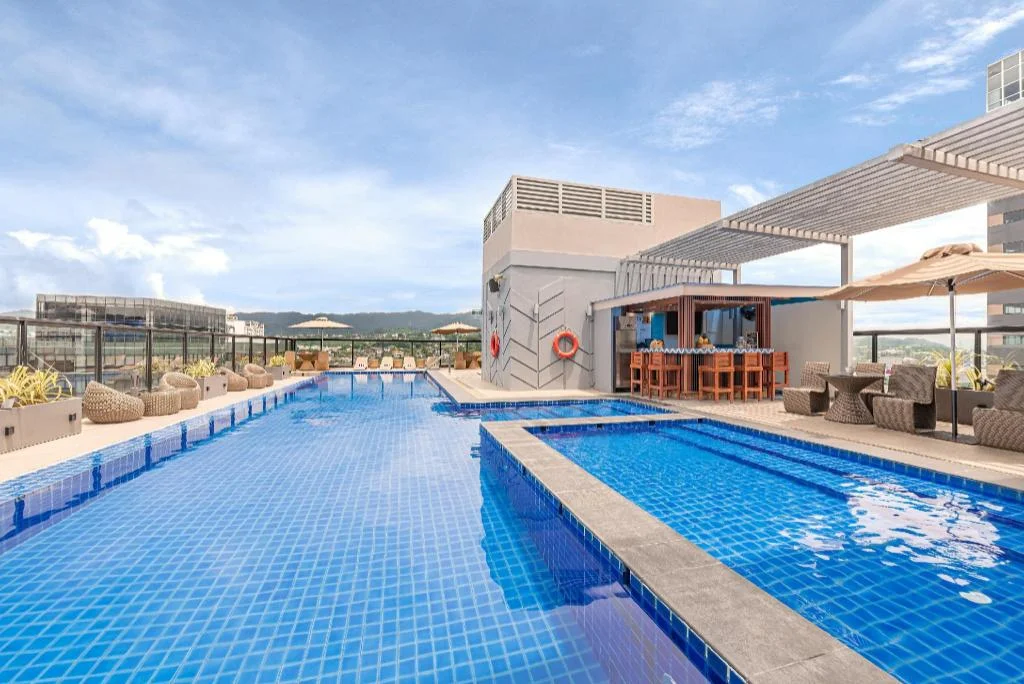
Seda Central Bloc Cebu City
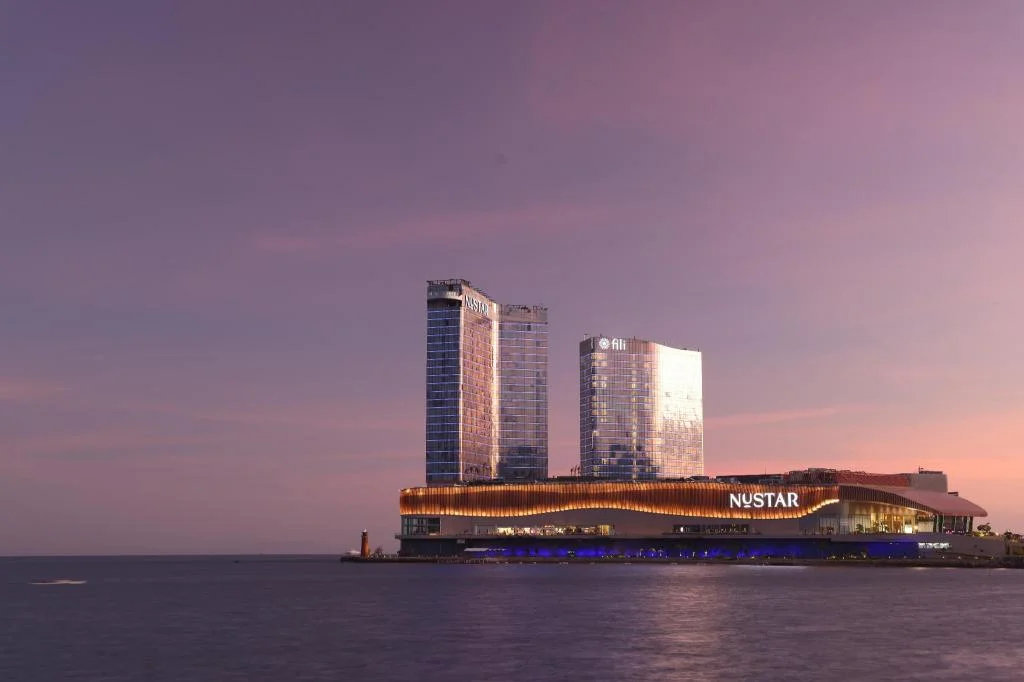
Fili Hotel - NUSTAR Resort & Casino Cebu
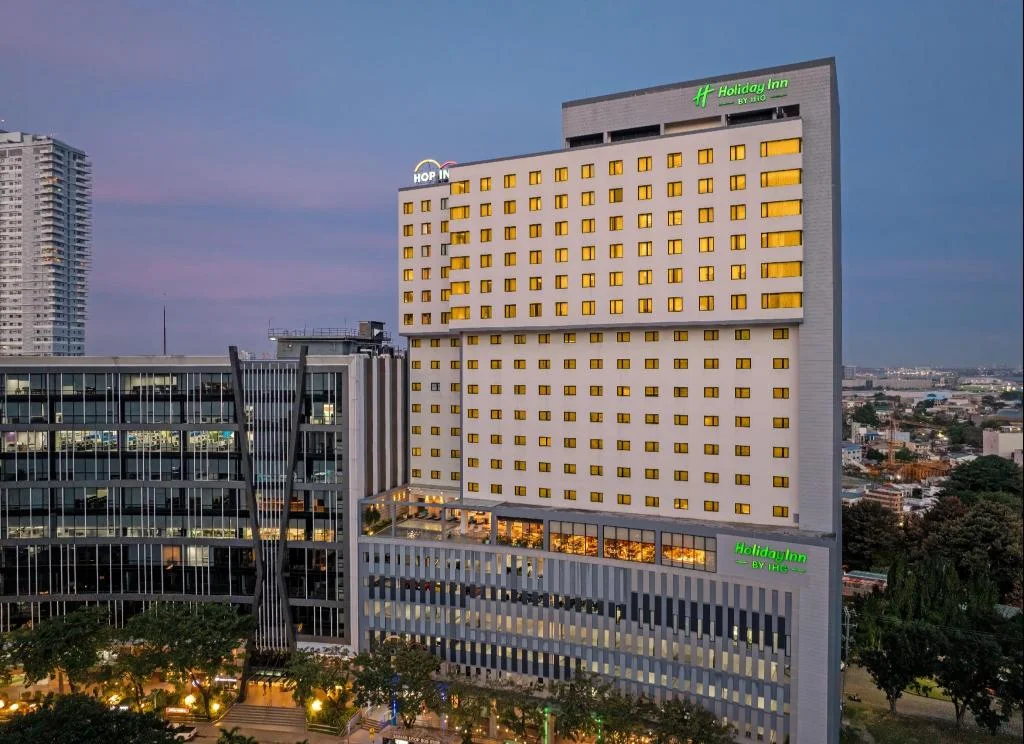
Holiday Inn Cebu City By IHG
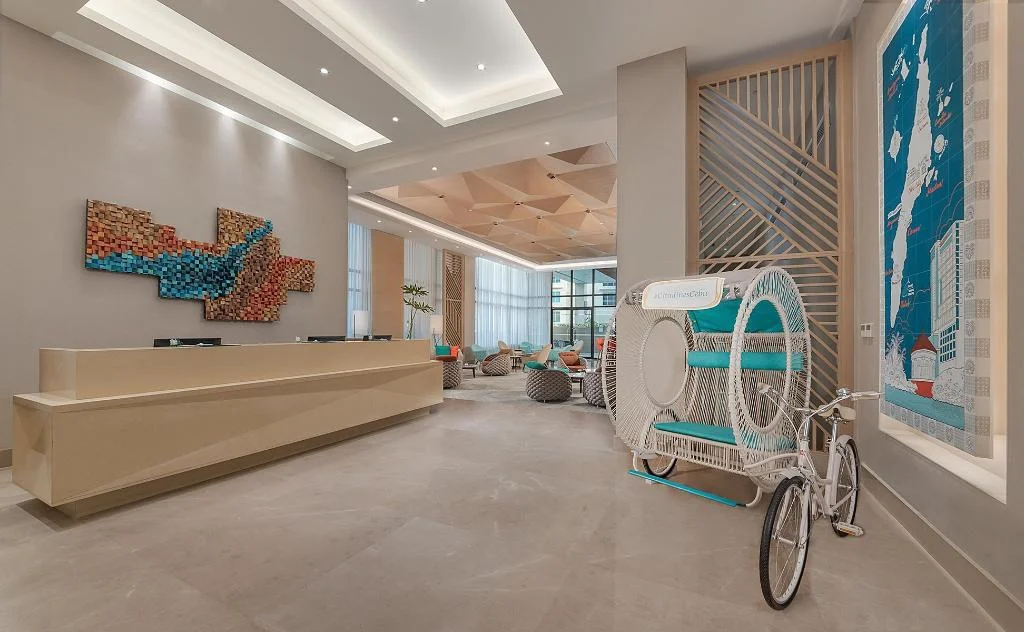
Citadines Cebu City
Prefer a rental? Vacation rentals near Cebu City
Self-catering condos and apartments — book the exact unit, kitchen included.
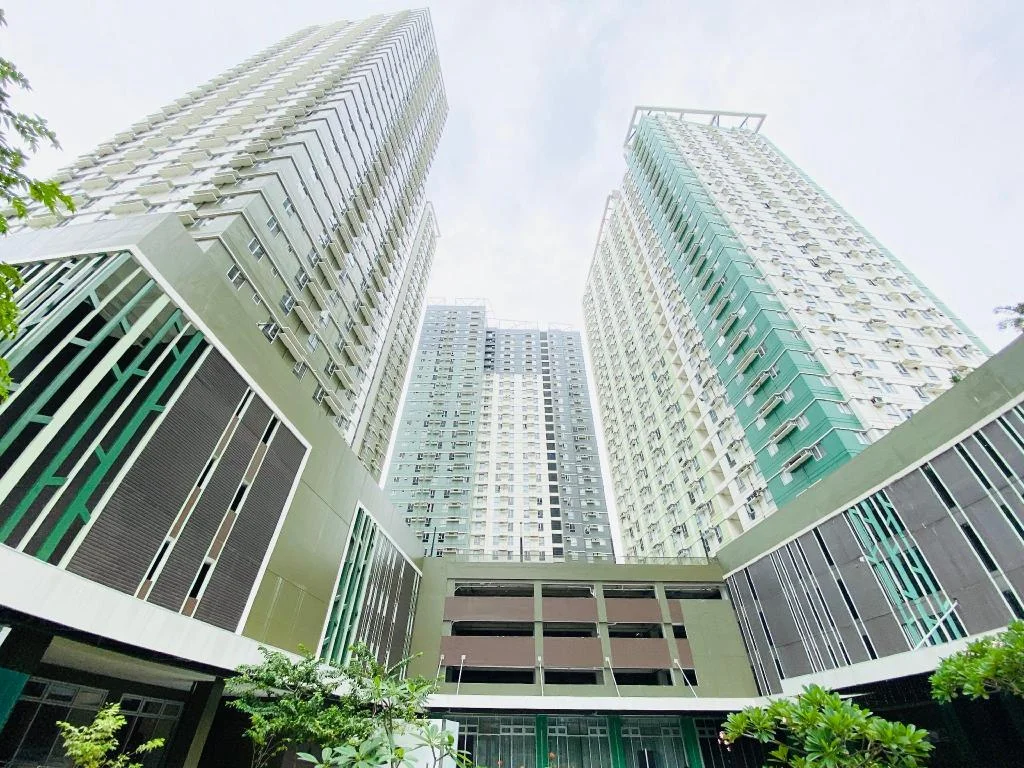
Cebu Avida Riala by P&J

Special Big Loft Unit w/Fibreop Internet & Netflix
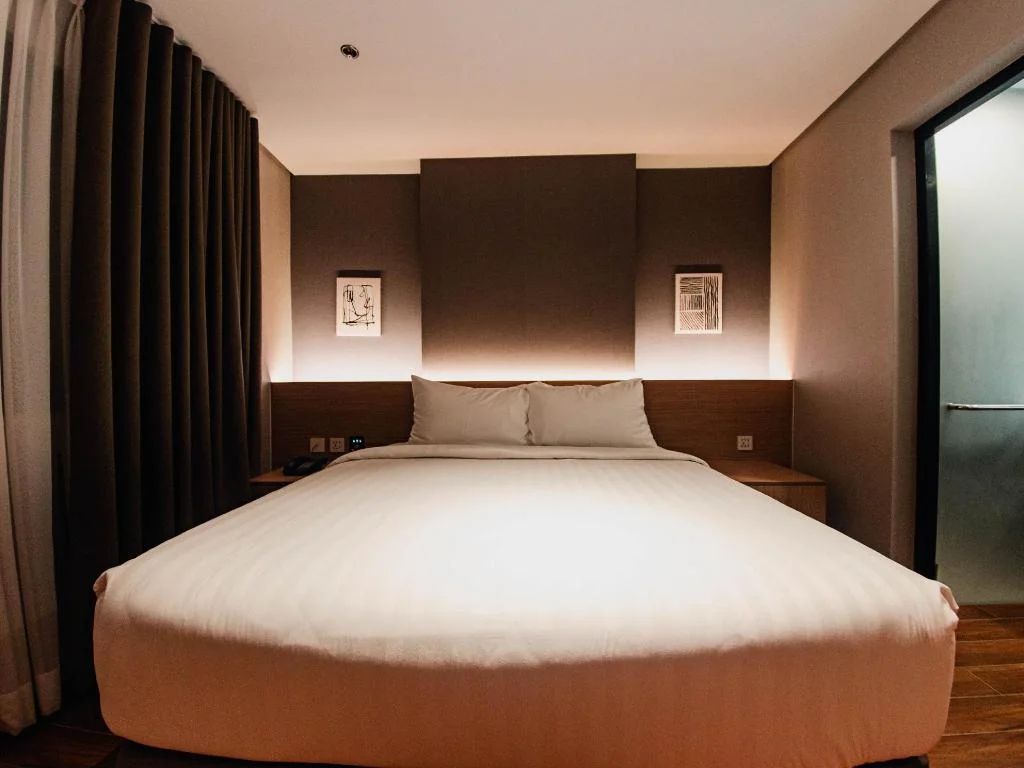
Moonstar Cebu Hotel - Deluxe Room
Before you go
Frequently asked
Is Cebuano the same as Bisaya?
Is Cebuano the same as Tagalog or Filipino?
How many people speak Cebuano?
Do I need to learn Cebuano to visit Cebu?
Is Cebuano hard to learn?
What script is Cebuano written in?
Are there different dialects of Cebuano?
What's a good app or resource to start learning?
More Places to Explore
Temple of Leah
Cebu City
A magnificent Roman-inspired temple built as a monument of love, nicknamed 'Cebu's Taj Mahal,' offering stunning architecture and city views.
Tops Lookout
Cebu City
Cebu City's premier hilltop viewpoint offering stunning panoramic views of the city, especially spectacular at sunset and nighttime.